Order Verification & Error Handling
Behavioral Diagram
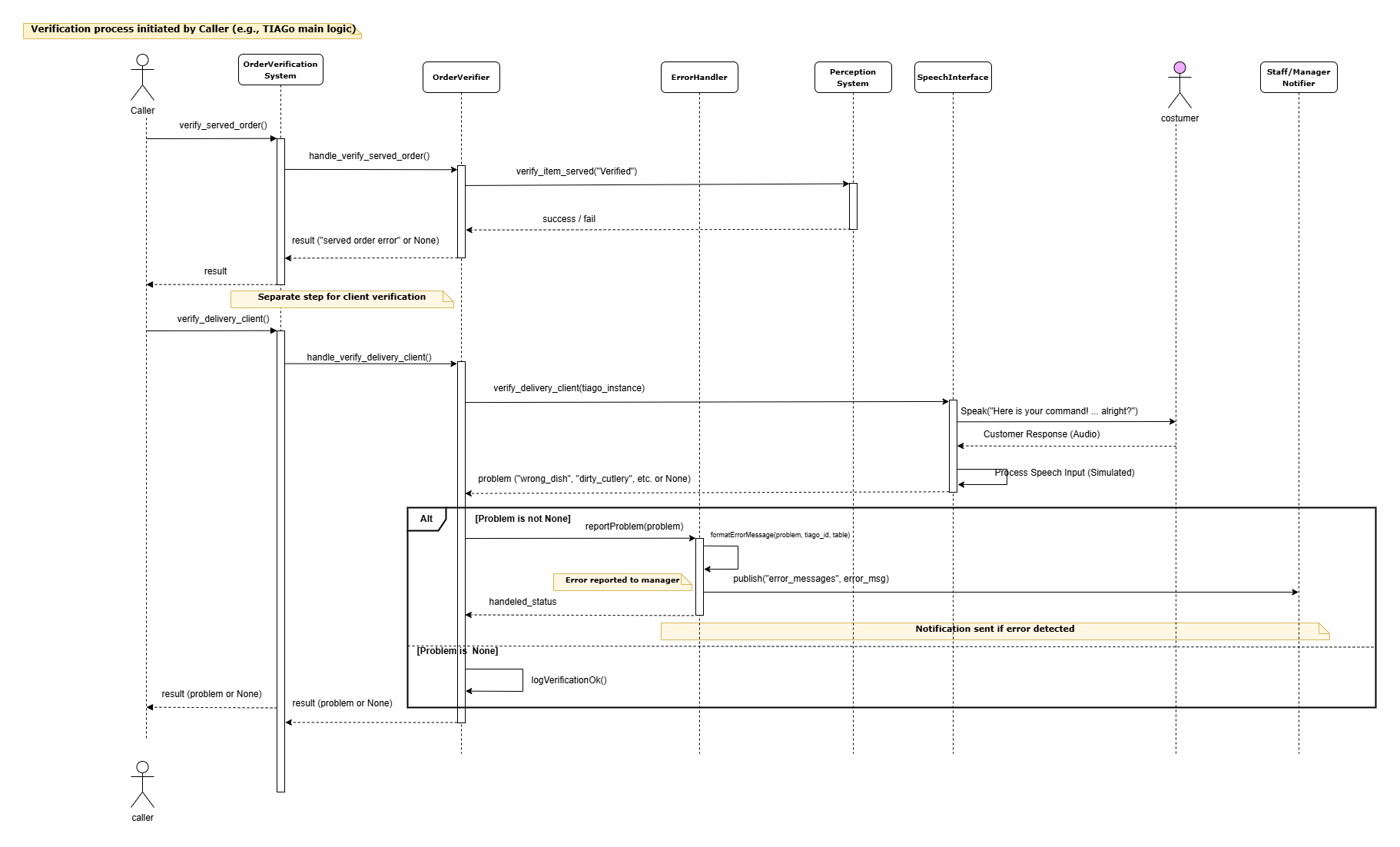
Fig. 4: Order Verification system sequence diagram.
Why sequence diagram?
This component is primarily interaction-focused. It involves a sequence of messages between the robot (specifically this system via the Speech Interface), the customer, and potentially the staff/Orchestration System (for error reporting). A Sequence Diagram clearly visualizes the timing and order of these interactions.
Description
This sequence diagram illustrates the interactions involved in the order verification process, typically initiated by a Caller such as the main TIAGo robot logic. It involves verifying both the placement of the item and the customer’s satisfaction.
Participants:
Caller: The entity initiating the verification (e.g., TIAGo robot).
OrderVerificationSystem: The main component handling the verification process.
OrderVerifier: A sub-component or class likely responsible for the core verification logic.
ErrorHandler: A component responsible for handling and reporting errors.
PerceptionSystem: Provides visual verification capabilities.
SpeechInterface: Handles interaction with the customer via speech.
customer: The human customer receiving the order.
Staff/Manager: Personnel notified in case of errors.
Interaction Flow:
Verify Item Served: * The Caller sends a verify_served_order() message to the OrderVerificationSystem. * The OrderVerificationSystem delegates this by sending handle_verify_served_order() to the OrderVerifier. * The OrderVerifier interacts with the PerceptionSystem by sending verify_item_served(). * The PerceptionSystem performs its check and returns a success / fail status to the OrderVerifier. * The OrderVerifier processes the perception result and returns the outcome (result: served_order_error or None) to the OrderVerificationSystem. * The OrderVerificationSystem returns this result to the Caller.
Verify Delivery with Client (Separate Step): * The Caller initiates the client verification step by sending verify_delivery_client() to the OrderVerificationSystem. * The OrderVerificationSystem delegates by sending handle_verify_delivery_client() to the OrderVerifier. * The OrderVerifier interacts with the SpeechInterface by sending verify_delivery_client(tiago_instance). * The SpeechInterface initiates interaction with the customer (e.g., “Speak: Is your command okay?”). * The customer responds (e.g., Customer Response (Audio)). * The SpeechInterface processes the response (simulated) and returns the result (problem: ‘wrong dish’, ‘dirty cutlery’, etc. or None) to the OrderVerifier.
Handle Client Response (Alternative Fragment - `alt`): * [Problem is not None]: If the SpeechInterface detected a problem:
The OrderVerifier sends reportProblem(problem) to the ErrorHandler.
The ErrorHandler handles the problem, potentially by sending publish_error_messages(error_msg) (e.g., to a ROS topic).
The ErrorHandler notifies the Staff/Manager (“Error reported to manager”).
The ErrorHandler returns a handeled_status to the OrderVerifier.
- [Problem is None]: If no problem was detected:
The OrderVerifier logs the successful verification (logVerificationOk()).
Return Final Result: * The OrderVerifier returns the final outcome (result: problem or None) to the OrderVerificationSystem. * The OrderVerificationSystem returns this final result to the Caller.
Overall Outcome:
The process verifies the order the at the serving area via perception and the customer’s confirmation via speech. If any issues are detected, particularly from the customer interaction, the ErrorHandler is invoked to log the issue and notify staff. The final result indicating success or the nature of the problem is returned to the original Caller.
Unit Test KPIs
Spatial Analysis
- Percentage of times correct grasp determined:
Computed by taking the ratio of the number of times the Order Verification and Error Handling component correctly determines if a plate is properly grasped to the total number of grasp verification tests performed, multiplied by 100. This assesses the reliability of verifying grasping operations.
- Percentage of times correct placement determined:
Computed by taking the ratio of the number of times the Order Verification and Error Handling component correctly determines if a plate is correctly laid on the table to the total number of placement verification tests performed, multiplied by 100. This assesses the reliability of verifying placement operations.
Sound Analysis
- Percentage of times client problem correctly determined:
Computed by taking the ratio of the number of times the Order Verification and Error Handling component correctly determines (via simulated discussion analysis) whether a client has a problem to the total number of interaction tests performed, multiplied by 100. This assesses the component’s ability to effectively interpret client interactions.